Let’s talk about the most underrated free link building strategy available to any SaaS company right now.
While most brands are grinding away at guest post outreach, paying for directory listings, or building Web 2.0 properties — a small group of smart SEOs are quietly earning DR 60, DR 70, and DR 80+ backlinks from publications like Forbes, Business Insider, and TechCrunch.
For free.
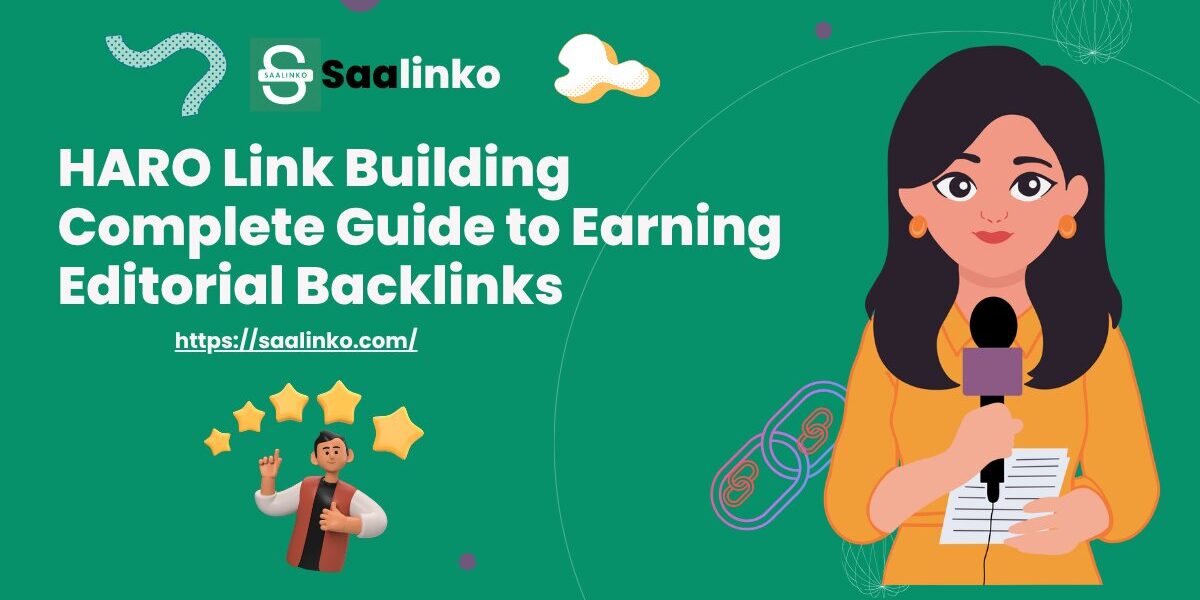
The strategy is called HARO link building — and in 2026, it is back, more powerful than ever, and completely free to use.
In this guide, we will walk through exactly how HARO works in 2026, what changed after the platform’s relaunch, how to write pitches that actually get accepted, and how to build it into a consistent monthly link acquisition system for your SaaS brand.
What is HARO Link Building?
HARO stands for Help a Reporter Out.
It is a platform that connects journalists who need expert sources with brands and individuals who can provide them.
Here is how it works:
A journalist at Forbes, TechCrunch, or a major industry publication is writing an article and needs expert input — a quote, a data point, or a specialist opinion. They post a query on HARO describing what they need. As a source, you receive those queries via daily email, respond to the ones that match your expertise, and if the journalist uses your response, you earn a mention — and usually a backlink — in their published article.
The result: an editorial link from a high-authority publication that you did not pay for, did not manufacture, and did not need months of outreach to secure.
That is why HARO link building is one of the most powerful link building strategies available to any SaaS company in 2026.
HARO in 2026 — What Changed?
HARO has had an interesting journey recently that most guides do not cover accurately.
The HARO Timeline
2007: Peter Shankman founded HARO as a Facebook group connecting journalists with sources. It grew into the dominant journalist-source matching platform.
2023: Cision acquired HARO and rebranded it as Connectively, introducing paid tiers that nobody wanted.
December 2024: Connectively shut down — causing widespread panic among SEOs who relied on HARO for link building.
April 2025: HARO was acquired by Featured.com and relaunched as a free, ad-supported platform. The three daily email digests returned.
2026: HARO is fully operational again — and the competition has actually thinned out compared to its peak years, because many SEOs assumed it was permanently gone.
What This Means for You
The HARO relaunch in 2025 created a window of opportunity that still exists in 2026. Fewer competitors are actively using it. Journalist queries are flowing again. And the platform is completely free to use.
If you are not using HARO as part of your SaaS link building strategy, you are leaving high-authority editorial backlinks on the table.
Why HARO Links Are the Most Valuable Links You Can Build
Not all backlinks are equal. HARO links sit at the very top of the authority stack for one simple reason: they are genuinely editorial.
Editorial Links vs. Manufactured Links
When a journalist at a major publication decides to cite your brand in their article, that is an editorial decision made by a real human with editorial standards. Google treats this fundamentally differently from a link you placed on a blog you paid for or a directory where anyone can submit.
The SEO Impact
HARO links consistently deliver:
- Domain Rating impact: Links from DR 60-90+ publications move DR scores in ways that most other tactics cannot replicate
- Topical relevance signals: When your SaaS link building brand is quoted in articles about SEO, marketing, and backlinks, Google builds strong topical associations
- E-E-A-T signals: Being cited by recognized publications is one of the most direct ways to build Google’s E-E-A-T (Experience, Expertise, Authority, Trust) signals
- Brand awareness: Getting mentioned in Forbes or TechCrunch creates brand touchpoints with your target audience that paid advertising rarely achieves
For SaaS companies especially, where buyers research extensively before purchasing, being cited in authoritative industry publications is a conversion accelerator — not just an SEO tactic.
How HARO Works in 2026 — Step by Step
Step 1 — Create Your Source Account
Go to featured.com (the current HARO platform) and create a free source account.
Complete your profile fully:
- Real name and job title
- Company name and website URL
- Brief bio that establishes your expertise
- Select 3-5 relevant categories (for SaaS link building, choose: Business & Finance, Technology, Marketing)
Important: Do not select every category. Targeted categories mean fewer but more relevant queries — which means better response rates.
Step 2 — Set Up Your Email System
HARO sends three daily email digests:
- Morning: 5:35 AM EST
- Afternoon: 12:35 PM EST
- Evening: 5:35 PM EST
Speed is critical. Journalists often receive dozens of responses within the first hour. Set up email filters that route HARO digests to a dedicated folder and alert you immediately when they arrive.
Step 3 — Filter Queries Ruthlessly
Not every query deserves a response. Before pitching, evaluate:
- Publication authority: Is the publication DR 40+? Does it have real organic traffic?
- Relevance to your expertise: Can you answer this from genuine experience?
- Query specificity: Specific queries (“what is the most underrated link building tactic for SaaS B2B companies?”) convert far better than broad queries
A focused response to one highly relevant query is worth more than ten generic responses scattered across unrelated topics.
Step 4 — Write a Pitch That Gets Published
This is where most people fail. Here is the anatomy of a winning HARO pitch:
Subject line format:HARO Response: [Query Topic] — [Your Name], [Title] at [Company]
Pitch structure:
Opening (1 sentence): Establish credibility immediately. Who are you and why should the journalist trust your response?
Core response (3-5 sentences): Answer the journalist’s actual question with a specific, data-backed, or experience-driven insight. Avoid generic advice they could Google. Give them something genuinely useful and quotable.
Supporting context (1-2 sentences): Brief additional detail that adds color or specificity to your main response.
Bio (1 sentence): Name, title, company, and website URL.
Total length: Under 200 words. Journalists are under deadline pressure. Long pitches get skipped.
Step 5 — Respond Within 60 Minutes
This is non-negotiable. Journalists often work to tight deadlines and frequently select sources from the first few quality responses they receive. If you wait 24 hours to respond, the opportunity is almost certainly gone.
Build a system where you can respond to relevant queries within 60 minutes of the email arriving.
HARO Pitch Template — Copy This
Here is a proven template you can adapt:
Subject: HARO Response: [Query Topic] — [Your Name], [Title] at [Company]
Hi [Journalist name if available],
[One sentence establishing your specific expertise relevant to this query.]
[Core response — 2-3 sentences with your specific, expert insight. Include a concrete example, data point, or counterintuitive perspective that a journalist can quote directly.]
[1-2 sentences of supporting context that add depth to your main point.]
— [Your Full Name]
[Your Title], [Company Name]
[Website URL]
What makes this work:
- Short and scannable — under 150 words
- Immediately establishes expertise
- Contains quotable material that makes the journalist’s job easier
- Clean attribution at the end
HARO Alternatives in 2026
HARO is back, but smart SEOs do not rely on a single platform. Here are the best alternatives to run alongside HARO in 2026:
Qwoted
A professional journalist-source matching platform with a strong B2B focus. Particularly effective for SaaS and technology brands.
SourceBottle
Australia-founded but with global reach. Free tier available. Strong for niche industry publications.
Help a B2B Writer
Focused exclusively on B2B content. Writers and journalists post queries, and B2B experts respond. Excellent fit for SaaS, consulting, and professional services companies.
#JournoRequest on X (Twitter)
Journalists post source requests using these hashtags in real time. Free, fast, and global. Requires active monitoring.
Common HARO Mistakes to Avoid
Mistake 1 — Pitching Everything
Responding to queries outside your genuine expertise is the fastest way to get a reputation as a low-quality source. Journalists remember bad pitches. Stick to what you actually know.
Mistake 2 — Generic AI-Generated Responses
Before HARO’s shutdown, AI-generated pitches flooded the platform so badly that journalists stopped trusting responses. In 2026, journalists are extremely sensitive to AI content. Your pitch must contain genuine, specific, human expertise — not generic advice rephrased by an AI.
Mistake 3 — Burying Your Credibility
Do not put your credentials at the end of a long response. Establish your expertise in the first sentence. Journalists scan. If they do not see a credible source immediately, they move to the next pitch.
Mistake 4 — Sending Too Late
If you see a HARO query three hours after the email arrived, it may already be too late. Set up instant alerts and build a habit of checking HARO digests as soon as they arrive.
Mistake 5 — Ignoring the Question
Read the journalist’s query carefully. Many pitches fail because they answer a related question rather than the specific one asked. Stay precisely on topic.
How Many HARO Links Can You Realistically Earn?
Setting realistic expectations is important.
Response rate: The average HARO response rate is 8-15% for well-crafted, relevant pitches targeting appropriate queries.
Monthly link potential: For a SaaS brand actively pitching 20-30 relevant queries per month, earning 2-5 HARO links per month is a realistic target after the first 60-90 days.
Quality of links: According to published HARO data, 68% of HARO queries come from domains with a Domain Rating of 50 or above. The average domain authority of HARO placements is DR 61.
Timeline: From pitch submission to a live link, the typical timeline is one to four weeks depending on the publication’s editorial calendar.
Integrating HARO Into Your SaaS Link Building Strategy
HARO links are most powerful when they are part of a broader, diversified white hat link building strategy — not your only link acquisition channel.
Here is how HARO fits into a complete SaaS link building system:
HARO and digital PR: Earn high-authority editorial links from journalists
Guest posting: Fill topical gaps and gain anchor text control for target pages
Niche edits: Add link velocity for competitive keywords
Profile creation and directories: Build brand entity signals
Skyscraper content: Create linkable assets that attract natural links
For a complete breakdown of how to execute each of these strategies, read our guide on white hat link building tactics for SaaS and the skyscraper technique — both of which complement HARO link building effectively.
Tracking Your HARO Results
Keep a simple spreadsheet to track:
- Query details (publication, topic, date submitted)
- Pitch sent (yes/no)
- Response received (yes/no)
- Link live (yes/no, URL)
- Domain authority of placement
- Date link appeared in Semrush/Ahrefs
Review your HARO data monthly. Which query categories convert best? Which publications respond most? This data helps you focus your energy on the highest-return opportunities over time.
Also use backlink monitoring tools to track when new HARO links get discovered and indexed — and to verify they remain live over time.
Frequently Asked Questions
Is HARO free in 2026?
Yes. After Featured.com acquired and relaunched HARO in April 2025, the platform returned to a free, ad-supported model. You can subscribe as a source and receive daily journalist queries at no cost.
How long does it take to earn a HARO backlink?
From pitch to live link, the typical timeline is one to four weeks. News sites may publish within 48 hours. Monthly trade publications may take several weeks. After a link goes live, plan for 4-12 weeks before it meaningfully impacts keyword rankings.
What types of publications use HARO?
HARO is used by journalists and editors at major publications including Forbes, Business Insider, TechCrunch, industry blogs, trade publications, and niche websites. According to published platform data, 68% of queries come from domains with a Domain Rating of 50 or above.
Can a new SaaS company use HARO?
Yes. Even new brands without an established media presence can earn HARO links by providing genuinely expert responses. The journalist cares about the quality of your insight, not your domain authority. Start with niche trade publications before targeting major publications.
How many HARO pitches should I send per week?
Quality beats quantity. Aim for 5-10 highly relevant, well-crafted pitches per week rather than blasting every query you see. A 15% conversion rate on 8 targeted pitches per week produces better results than a 2% rate on 40 generic pitches.
What is the difference between HARO and guest posting?
Guest posting requires you to create content for another site and pitch editors. HARO requires you to respond as an expert source to journalist queries. HARO links are typically more authoritative (editorial links from journalists) while guest posts give you more control over anchor text and content placement.
Conclusion
HARO link building in 2026 is one of the few strategies where the quality ceiling is essentially unlimited.
DR 80+ editorial links from the world’s most recognized publications — earned through genuine expertise, at zero cost.
The barrier is not money. It is consistency, speed, and the ability to deliver genuinely quotable expert responses under deadline pressure.
Most SaaS brands are still sleeping on this. They are paying for directory submissions and social bookmarking while ignoring a completely free channel that delivers the kind of editorial backlinks that actually move domain authority and rankings.
If your brand has real expertise — start today. Create your source account on Featured.com. Set up email alerts. Respond to your first relevant query this week.
One good HARO placement can do more for your rankings than 50 low-quality links combined.
For a complete SaaS link building strategy that combines HARO with other proven tactics, explore our SaaS link building services.
Start building. Stay consistent. Results will follow.